Commercial Locksmith San Antonio: Build a Business Door and Key Inventory
A practical San Antonio checklist for documenting business doors, current keys, access needs, and hardware symptoms before contacting a commercial locksmith during business hours.
Why a door and key inventory helps a business
Commercial locksmith service in San Antonio often starts with a simple operational question: which doors need to open, close, latch, and stay accessible to the right people? A short written inventory helps a business describe that question clearly before anyone assumes every door needs the same hardware or keying change.
Start with exterior entries, then add offices, storage rooms, utility areas, and other doors that require controlled access. For each door, note the location, the current lock or key symptom, who normally needs access, and whether the door is currently able to close and secure.
This preparation supports a focused commercial locksmith conversation. It can also reveal when the immediate need is limited to one door rather than a wider key-control change across the property.
What to include for each business door
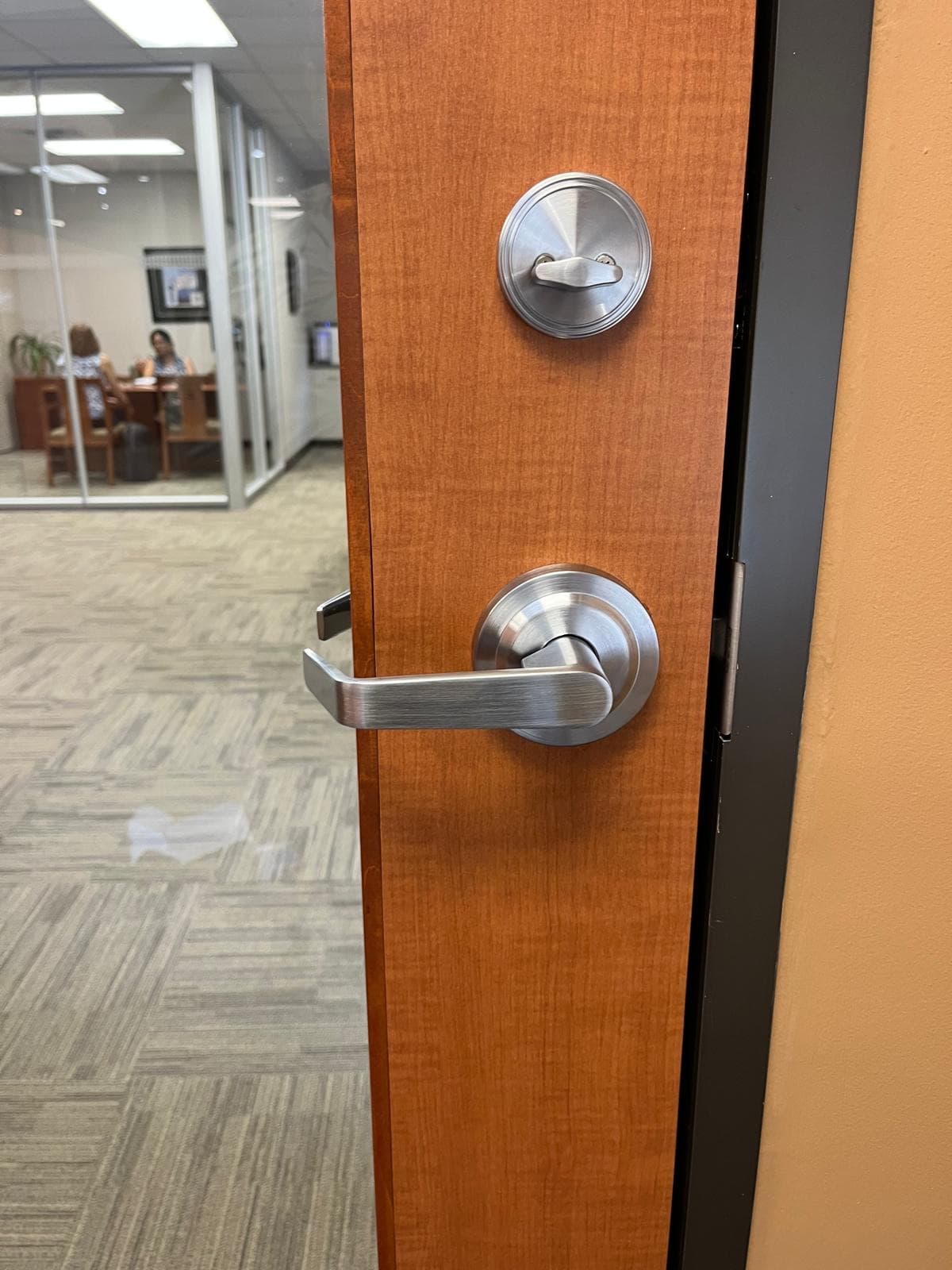
Use one line for each affected door. Identify the area it serves, whether it is an exterior or interior door, the lock type if known, and the people or roles who should have access. Note whether the key sticks, the latch misses the strike, the trim is loose, or the door needs to be pushed or pulled to latch.
Separate a key-control issue from a hardware issue. For example, an employee access change may call for a commercial locksmith plan, while a door that does not close or latch correctly may also need a door closer service assessment. A physical door that cannot secure should be identified clearly so the scope is not lost among general key requests.
If the property uses multiple keys, record how they are currently labeled and which areas they open. Do not list sensitive combinations or security codes in a public document. A working inventory for the authorized decision-maker is enough to make the first service conversation more efficient.
A checklist for the first service conversation
- Business name, San Antonio-area location, and the best on-site contact.
- Each door that needs attention and whether it is exterior, office, storage, or another area.
- What the key, lock, latch, strike, and door closure are doing now.
- Which roles need access and whether a recent access change is part of the request.
- Who is authorized to approve the work and any entry instructions for the building.
Those details let the business and locksmith discuss the actual access need without treating a door hardware problem, a key-control request, and a door-closure concern as the same issue.
What is a business door and key inventory?▾
Which doors should be included?▾
What if only one commercial door will not latch?▾
Should we list every key and code in the inventory?▾
When can a San Antonio business contact Express Local Service?▾
Related commercial locksmith services
Choose the service page that best matches the access or hardware issue at your business.
Tell us which doors are affected and what the hardware is doing. We will help you plan the appropriate service during business hours.
Contact Express Local Service